
If you train regularly—lifting, running, group classes, or recreational sports—there’s a good chance your knees have acted up at some point.
Maybe it’s:
- A dull ache after leg day
- Stiffness when you start a run
- Pain that flares up every few weeks… then mysteriously fades
The frustrating part?
It never feels like a real injury—but it also never fully goes away.
At ADAPT Recharge, we see this all the time. And here’s the truth most people miss:
Most knee pain during training isn’t random—and it’s not just “getting older.”
Let’s break down why your knees keep acting up—and what actually needs to happen to fix it long term.
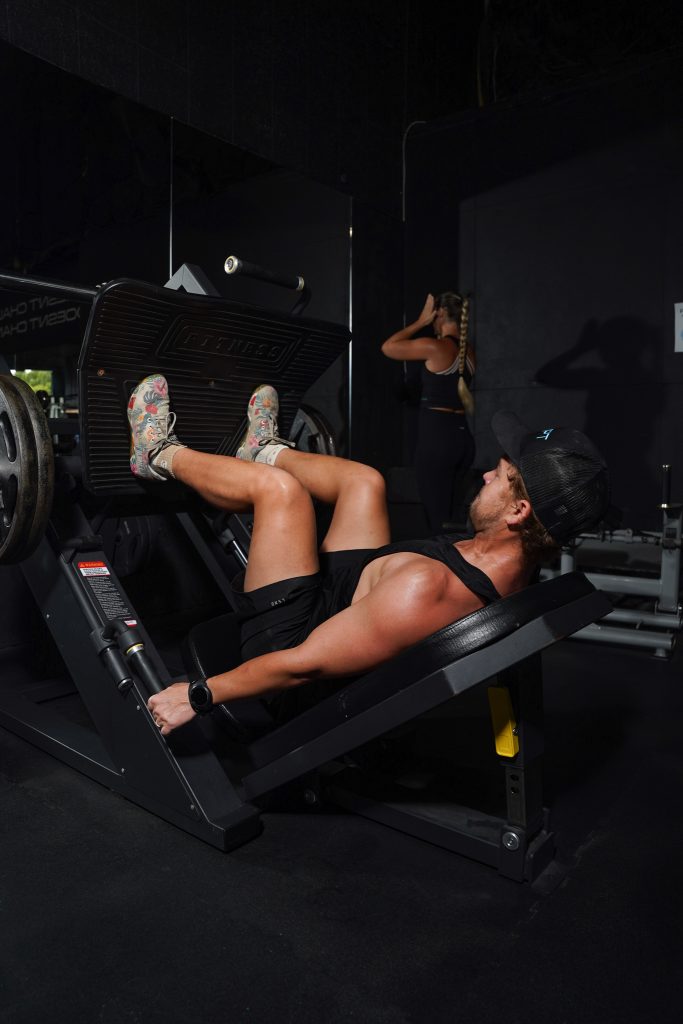
Common Reasons Your Knees Hurt During Training
1️⃣ You’re Doing Too Much, Too Fast
Training volume often increases faster than your tissues can adapt.
That might look like:
- More miles
- Heavier loads
- Extra classes per week
Even if your muscles feel strong, your tendons, cartilage, and connective tissue may not be ready yet.
⚠️ Pain usually shows up weeks later, which is why it feels like it came out of nowhere.
2️⃣ Your Knee Is Paying for Problems Elsewhere
Your knee sits between two major joints: the hip and the ankle.
When either one lacks mobility or control, the knee is forced to compensate.
Common patterns we see:
- Limited ankle mobility → knee stress in squats or running
- Weak or underactive glutes → knee collapsing inward
- Stiff hips → poor force transfer through the leg
3️⃣ Strength Imbalances Are Sneakier Than You Think
You can be “strong” and still be imbalanced.
When certain muscles dominate—while others lag behind—the knee absorbs forces it shouldn’t.
This often shows up as:
- Pain below the kneecap
- Inner or outer knee irritation
- Discomfort when slowing down or changing direction
It’s not a lack of effort.
It’s a lack of targeted strength.
4️⃣ Your Movement Patterns Are Working Against You
How you move matters just as much as how much you train.
Subtle technique issues—especially under fatigue—can quietly overload the knee:
- Poor squat mechanics
- Inefficient running gait
- Breakdown late in workouts
Why it’s tricky:
- You can still get through workouts
- Pain shows up after, not during
- Rest makes it feel better… temporarily
Then training resumes—and the cycle repeats.
5️⃣ An Old Injury Was Never Fully Resolved
Even minor past knee injuries can leave behind:
- Weakness
- Stiffness
- Altered movement patterns
If rehab stopped when pain disappeared (instead of when strength and control returned), hidden deficits often remain.
This is one of the biggest reasons knee pain becomes chronic instead of acute.
Why Knee Pain Keeps Coming Back
Here’s the key point most people miss:
Pain relief is not the same as problem resolution.
Rest, ice, stretching, or anti-inflammatories can calm symptoms—but they don’t fix:
- Load tolerance issues
- Movement inefficiencies
- Strength deficits
So when you return to training, the same stressors are still there…
and the pain comes right back.Recurring knee pain isn’t a weakness—it’s your body asking for a better plan.
How ADAPT Recharge Fixes the Root Problem
At ADAPT Recharge, we don’t guess—and we don’t hand out generic protocols.
We use our Road Map Program: a structured, individualized approach designed to get you back to training without limits.
What the Road Map Program Includes:
✔ Full movement & strength assessment
✔ Identification of why your knee is overloaded
✔ Hands-on care (physical therapy, chiropractic, massage, stretch therapy)
✔ Targeted corrective + strength work
✔ A clear progression back to training
The goal isn’t just to make your knee feel better.
The goal is to make your body more resilient than it was before the pain started.
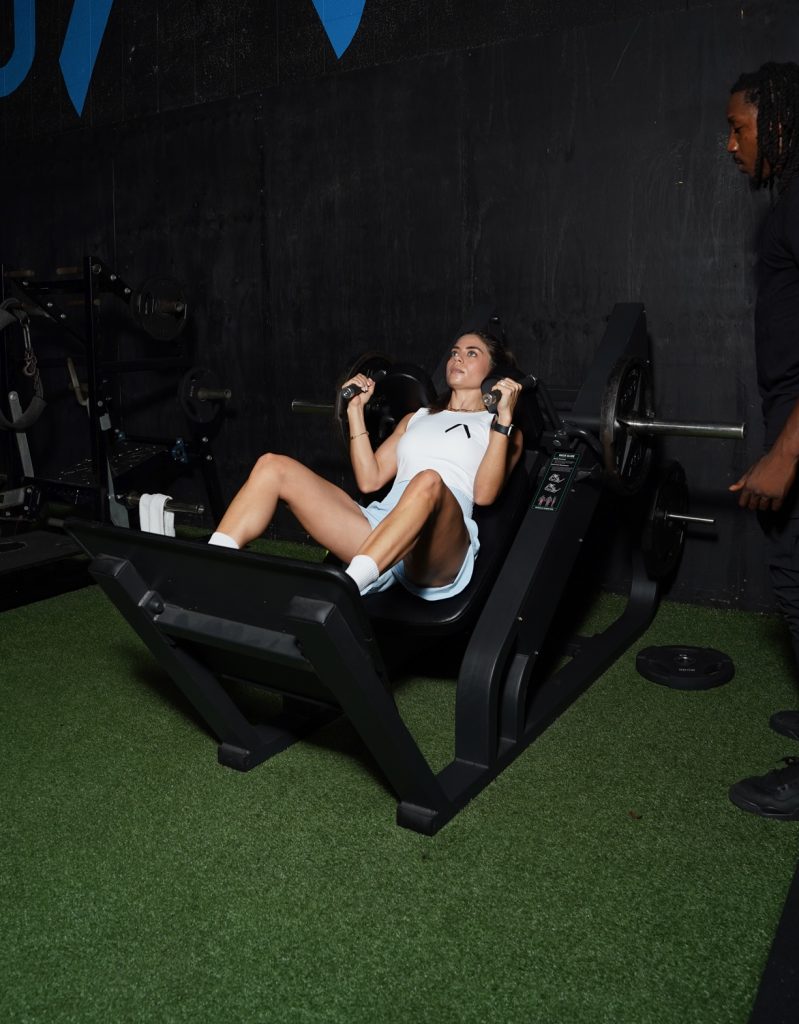
Train Without Guesswork. Train Without Limits.
If your knees keep acting up, your body isn’t asking for another break—it’s asking for clarity.
The Road Map Program at ADAPT Recharge gives you:
- A clear plan
- Individualized care
- A path forward that actually addresses the problem
📢 Ready to stop managing knee pain and start fixing it?
Book a consultation with ADAPT RECHARGE and let us build your road map back to confident, pain-free training