
🚨 Thinking about giving up overhead presses because your shoulder flares up?
Don’t.
Here’s the truth most people never hear:
Pain during overhead lifting doesn’t mean your shoulder is “bad.”
It means something in your system isn’t moving or stabilizing well — and your shoulder is paying the price.
Let’s break down why pressing overhead feels sketchy — and how to fix it so you can keep lifting pain-free.
1. It’s Rarely Just a Shoulder Issue
It’s a Mobility Stack Problem
To press overhead comfortably, your body needs coordinated movement from three key areas:
- Thoracic spine (mid-back)
- Scapula (shoulder blade)
- Glenohumeral joint (shoulder socket)
If even one of these is restricted, your shoulder is forced to compensate — and that’s when irritation shows up.
Quick self-check:
Stand tall and raise both arms overhead.
- Do your ribs flare?
- Do you have to arch your low back to get there?
If yes, the shoulder isn’t the root issue.
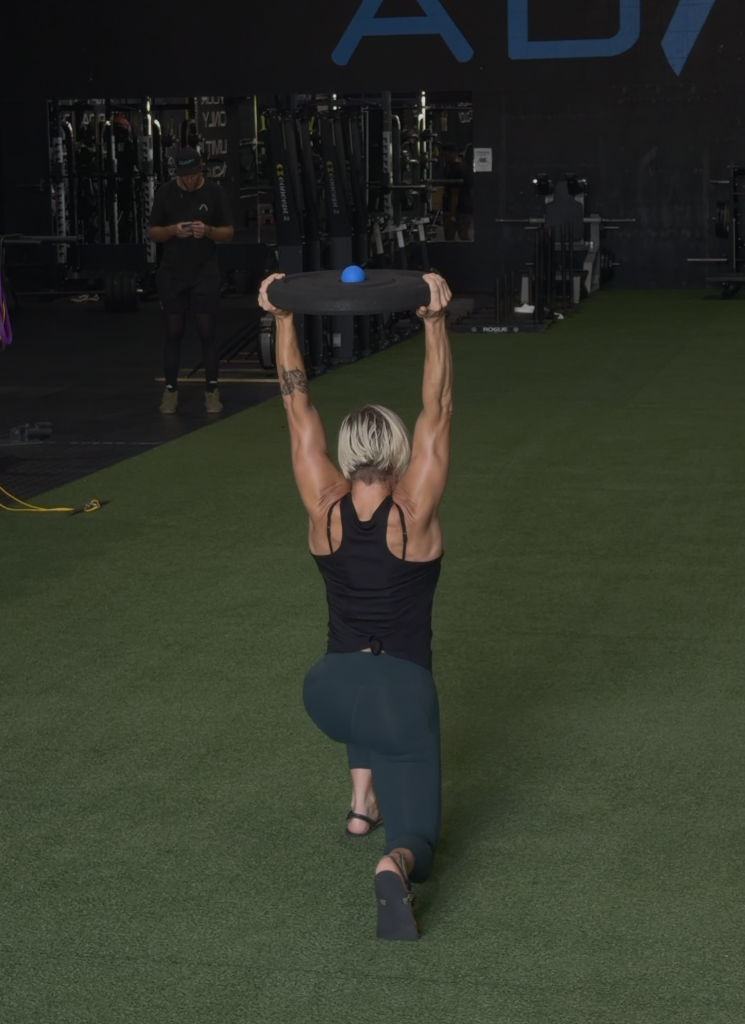
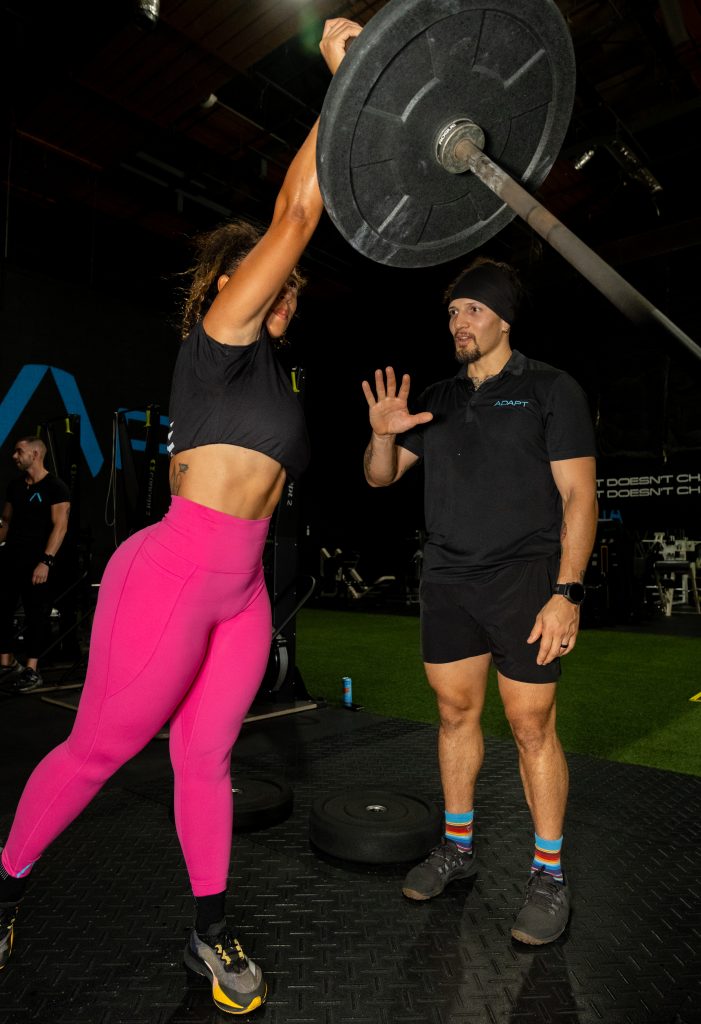
What helps:
Slow, controlled pressing to retrain movement patterns
Thoracic extension work (foam roller openers, cat-cows)
Scapular control drills (wall slides, serratus activation)
2. Your Shoulder Isn’t Centered in the Socket
If the head of your humerus drifts forward or upward during pressing, it can irritate structures like:
- The supraspinatus tendon
- The long head of the biceps
- The subacromial bursa
This often shows up as clicking, sharp pain mid-lift, or lingering soreness after training.
What helps:
- Training shoulder centration under load
- Landmine presses
- Bottoms-up kettlebell work
- Banded scapular control drills
3. You’re Strong — But Missing Eccentric Control
Many athletes can push weight overhead but struggle to lower it with control.
That lack of eccentric strength causes the joint to absorb stress it shouldn’t.
What helps:
Building control before speed or load
Tempo work (3-0-3 or 3-1-3)
Prioritizing strict presses before dynamic variations
Real Client Example
One of our clients — a 38-year-old CrossFitter — came in with six months of shoulder pain.
He could still press, but every workout left him sore for days. He was told to stop overhead lifting completely.
Instead, we:
- Addressed thoracic mobility restrictions
- Rebuilt scapular control
- Swapped kipping HSPUs for strict landmine presses
- Gradually reintroduced full overhead lifts
The result?
Pain-free overhead work — and a recent strict press PR.
Bottom Line: Don’t Quit the Movement. Fix the Mechanics.
Overhead pressing isn’t dangerous when done well.
But if it’s bugging you, something needs attention — not avoidance.
👋 Want help figuring out what’s actually causing your shoulder pain?
📅 Book a movement consult and get clear answers on what to fix — and how to keep training confidently.
Please subscribe to our channels on Instagram, TikTok, and Facebook.